




LED Headlamps
There are 16 products.
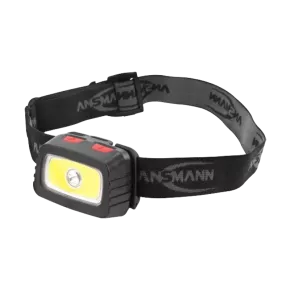
LED Headlamp HD200B - 185 LUMENS
Frequently asked questions
1. How do you choose a professional headlamp?
Choose a professional headlamp according to the task, the lighting distance, the required operating time and the constraints of the working environment. For close-range maintenance, prioritise a wide beam, several brightness levels and low weight. Night-time movement and long-distance inspections require greater range. Also check the runtime at the output level actually used, the power source, the IP rating, stability on the head or helmet and, where necessary, the appropriate ATEX certification.
2. How many lumens are needed for work?
The required output depends more on the area to be illuminated than on the trade alone. Moderate output is generally suitable for wiring, mechanical work and close-range checks, while an outdoor worksite or long-distance inspection may require several hundred lumens or more. High maximum output often reduces runtime, so compare the different modes. The range of professional LED headlamps can be filtered by output and runtime.
3. Is a very powerful headlamp always better?
No, the most powerful headlamp is not always the most suitable. At close range, excessive output can cause glare, eye fatigue and rapid battery drain. A lamp with several levels lets you use moderate light for precision work and reserve full power for movement or long-distance searches. Depending on the model, maximum output may also be temporary: compare the stated runtime for each level rather than looking only at the highest lumen figure.
4. What is the difference between a wide beam and a focused beam?
A wide beam illuminates the nearby work area and peripheral vision, whereas a focused beam concentrates the light to reach farther. A wide beam is useful inside an electrical cabinet, beneath a vehicle or during maintenance. A focused beam helps with night-time movement and remote inspection. Some models combine both: the BXR2.0 offered by Prolutech has a wide beam rated to 33 metres and a narrow beam rated to 81 metres.
5. How should the runtime of an LED headlamp be assessed?
Runtime should be compared at the light level actually required for the job. The maximum figure is generally achieved in the lowest mode and may not represent a full working day at maximum output. Where available, check the duration for each mode as well as the charging time. Allow a margin for cold conditions, battery ageing and unexpected delays, or choose a backup power option when reliable lighting is essential to the safety of the operation.
6. Should you choose a rechargeable or battery-powered headlamp?
A rechargeable headlamp is well suited to frequent use, while a battery-powered model allows the power source to be replaced immediately in the field. Rechargeable batteries reduce the need to purchase disposable cells, provided charging can be organised between jobs. Standard batteries remain useful for emergency equipment or locations without easy access to power. A dual-power headlamp combines both options: the FRP510 K-Light works with its rechargeable battery or three AAA batteries. Check out our battery-powered headlamps or our rechargeable models.
7. What is the SENSOR function on a headlamp used for?
The SENSOR function lets the user switch the lamp on or off with a hand movement in front of the sensor, without searching for the button. It can be useful when wearing gloves or when hands are dirty, particularly during maintenance, mechanical work and site operations. This function is not available across the whole range. It is documented on the K-Light FP400, FR480, FRP510 and FR1000; check the product page and instructions for the exact operation of the selected model.
8. Which features make a professional headlamp more comfortable?
Comfort depends on total weight, balance, the headband and stability during movement. A light lamp reduces fatigue during extended wear, but it must remain secure when the user bends down or works at height. Also check headband adjustment, lamp-head orientation and helmet compatibility. Pay close attention to how weight is stated: depending on the product page, it may be given without the headband, without batteries or with the rechargeable battery fitted.
9. Can a headlamp be attached to a safety helmet?
Some headlamps can be worn on a safety helmet, but compatibility must be checked for the specific combination of lamp, headband, clips and helmet. A non-slip strap or dedicated clips reduce movement while working. The helmet must continue to perform as designed and remain compliant, so improvised attachments, drilling and permanent modifications should be avoided. Consult the accessories specified by the manufacturer and test the stability of the complete assembly before starting work.
10. Which IP rating should be chosen for rain and dust?
The IP rating should match the actual exposure to spray, dust and water. In this code, the first digit relates to the ingress of solid objects and the second to water, in line with the IEC 60529 classification principle. An IP54 model and an IP67 model therefore do not provide the same protection. Never assume that a headlamp can be immersed: check the definition and limits stated on its product page.
11. Which headlamp should be chosen for night work or construction?
For night work, choose a stable, adjustable lamp suited to the working distance. A wide beam helps with manual tasks, while greater range supports movement and remote checks. Several modes make it easier to balance visibility and runtime. Also consider weather resistance, operating time, weight and helmet attachment. A headlamp improves individual visibility but does not replace the collective lighting and site signage required to secure a work area.
12. Which headlamp is suitable for industrial maintenance and electrical work?
For maintenance, a compact headlamp with a wide, adjustable beam makes inspection easier while keeping both hands free. An adjustable lamp head directs the light without forcing the user into an uncomfortable posture. Lower settings reduce reflections from metal surfaces or inside cabinets, while a brighter mode supports movement. For electrical work, the lamp never replaces lockout procedures, regulatory checks or personal protective equipment appropriate to the hazard.
13. Is an ATEX headlamp mandatory in an explosive atmosphere?
Yes, an area with a risk of an explosive atmosphere requires equipment with an ATEX certification appropriate to that zone. Resistance to water or impact alone does not make a lamp ATEX compliant. Certifications do not all cover the same environments. The required classification must be established before the equipment is selected. Discover our ATEX headlamps.
14. How should two headlamps be compared before purchase?
Compare headlamps in this order: intended use, beam pattern, useful output, runtime by mode, power source, IP protection, total weight and retention system. Then consider charging time, helmet compatibility, accessories and any required ATEX certification. Do not compare maximum lumens alone: a less powerful but lighter and longer-running lamp may be better for a full day of maintenance, whereas long range may take priority for outdoor inspection or emergency response.