




ATEX range
There are 19 products.
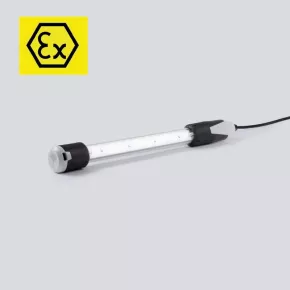
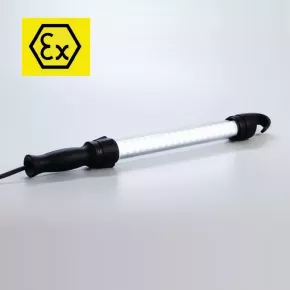
Tubulaire LED ATEX 230V 36W - 4620 LUMENS
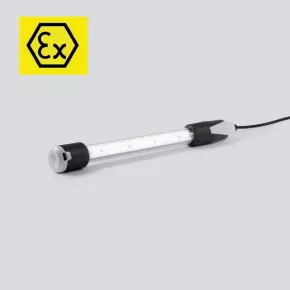
Tubulaire LED ATEX 230V 47W - 6040 LUMENS
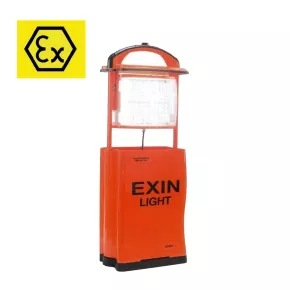
ATEX LED floodlight EX90L-1440SS - 1 440 LUMENS
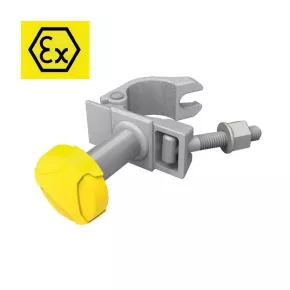
ATEX scaffolding bracket for NOVA projectors
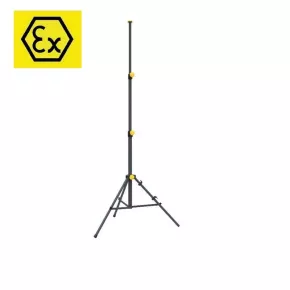
3 meters ATEX tripod K-Light EX
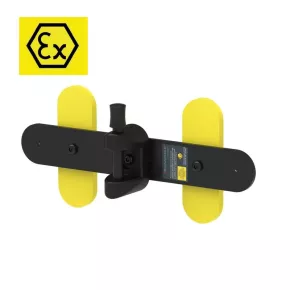
ATEX Magnetic bracket for NOVA floodlights
Frequently asked questions
What type of lighting should be used in an ATEX hazardous area?
In an ATEX hazardous area, it is essential to use lighting equipment with certification appropriate to the risks present in the working environment. The equipment must be suitable for the area classification, the type of explosive atmosphere (flammable gases, vapours or combustible dust) and the operating conditions.
For industrial professionals, maintenance technicians and emergency response teams, ATEX-certified LED lighting solutions provide suitable visibility during operations while meeting applicable safety requirements.
For more information, explore the ATEX range offered by Prolutech and find a lighting solution suited to your professional needs.
What is the difference between standard LED lighting and ATEX-certified lighting?
Standard LED lighting is not necessarily designed for use in potentially explosive atmospheres.
ATEX-certified lighting is designed and assessed according to specific requirements intended to prevent it from becoming an ignition source under its specified operating conditions.
This distinction is essential when working in chemical plants, refineries, gas facilities or certain industrial storage sites. Even a high-performance LED floodlight must not be used in an ATEX hazardous area without the appropriate certification.
How do you choose an ATEX floodlight for firefighters and emergency response teams?
Firefighters and emergency responders may encounter potentially explosive atmospheres when operating at industrial sites, in technical facilities or near flammable substances.
When choosing a suitable ATEX floodlight, several factors must be considered: certification, light output, battery life, portability and ease of deployment.
Portable, self-contained lighting makes it possible to operate in areas without an electrical power supply. However, the equipment must be compatible with the ATEX zone classification and the risks identified during the operation.
Which ATEX lighting solution is best for industrial maintenance operations?
Industrial maintenance operations often require additional lighting to inspect, repair or service equipment located in hard-to-reach areas.
Depending on the requirements, a portable ATEX floodlight can illuminate a large work area, while a more compact lighting solution can facilitate close-up work on machinery, pipework or technical installations.
The choice depends on the available space, the duration of the operation, the required light output and the ATEX protection level.
What is the difference between ATEX Zones 0, 1 and 2 for lighting?
ATEX zones are classified according to the frequency and duration of the presence of an explosive atmosphere.
Classification and Presence of an explosive gas atmosphere
- Zone 0 : Present continuously, frequently or for long periods
- Zone 1 : Likely to occur occasionally during normal operation
- Zone 2 : Unlikely to occur during normal operation and, if it does occur, persists only for a short period
For atmospheres containing combustible dust, the corresponding classifications are Zones 20, 21 and 22.
Before choosing ATEX lighting, it is important to check that its equipment category, group, temperature class and other certification characteristics meet the requirements of the relevant zone.
For more information, read our blog article: What is an ATEX zone and how do you choose the right product?. It provides additional information to help you understand ATEX classifications and select suitable equipment for your working environment.
Why choose portable, rechargeable ATEX lighting for industrial sites?
Portable, rechargeable ATEX lighting provides greater freedom of movement for professionals working in complex industrial environments.
It is particularly useful during maintenance operations, plant shutdowns, inspections or emergency interventions, especially when access to an electrical power supply is limited or unavailable.
Operating without a power cable can also make movement easier and reduce certain obstructions. However, it is essential to follow the manufacturer's instructions, particularly regarding battery charging and replacement.
What ATEX lighting should be used when working inside tanks, vessels or confined spaces?
Tanks, vessels and confined spaces can present specific challenges, including poor visibility, restricted access, reflective surfaces and the possible presence of flammable gases or vapours.
Compact ATEX lighting that is easy to position and provides even light distribution can facilitate inspections and maintenance work.
ATEX tubular lights are particularly useful for illuminating narrow spaces or specific work areas, provided their certification is compatible with the zone classification and operating conditions.
For operations requiring greater mobility, ATEX handheld lamps offer a practical portable lighting solution for technicians and emergency response teams.
Using certified lighting does not eliminate the need to follow specific confined-space safety procedures.
How many lumens are needed to effectively illuminate an ATEX hazardous area?
The required number of lumens depends on the area to be illuminated, the working distance and the type of operation.
For close-up inspections, focused lighting may be sufficient. Conversely, operations across large industrial installations may require a more powerful floodlight.
At Prolutech, two floodlights illustrate these different requirements: the PR1600-EX, delivering 1,600 lumens, and the PR4000-EX, delivering 4,000 lumens.
However, light output is not the only factor. Beam angle, light distribution, battery life and ATEX certification are also essential criteria when selecting professional lighting equipment.
How do you equip maintenance technicians or emergency response teams with ATEX lighting?
When equipping a team that regularly works in ATEX hazardous areas, it is important to select equipment suited to each user's tasks and working conditions.
An HSE manager, maintenance team leader or fire and rescue equipment manager should consider the range of operations performed, transport requirements, battery life and the ATEX zone classifications encountered.
It is also important to plan battery management, pre-use checks, storage instructions and equipment maintenance.
A consistent selection of lighting solutions helps improve operational organisation and equipment availability.
What should you check before buying professional ATEX lighting?
Before purchasing ATEX lighting for industrial use or emergency response operations, several factors should be checked:
- ATEX certification and compatibility with the intended hazardous area.
- Light output and the quality of light distribution.
- Battery life for extended operations.
- Durability and IP protection rating, depending on the working environment.
- Ease of transport and installation, especially for mobile operations.
- Charging, maintenance and storage requirements, particularly when managing a fleet of professional equipment.
To explore the available solutions, visit the Prolutech ATEX lighting range.